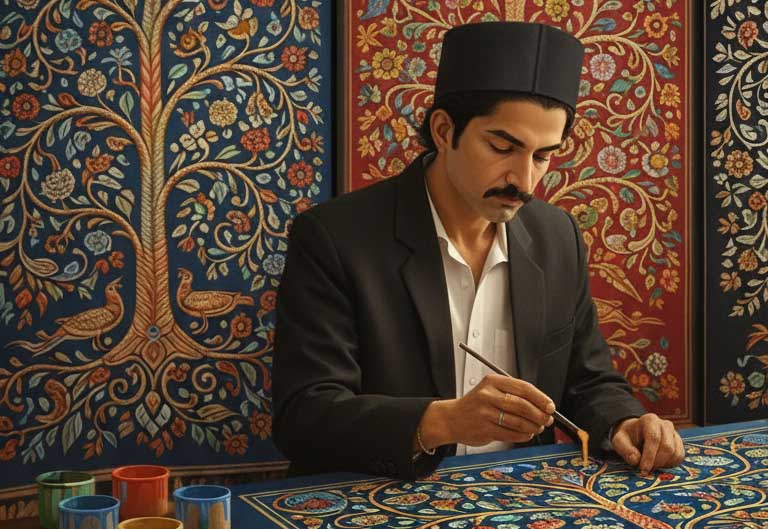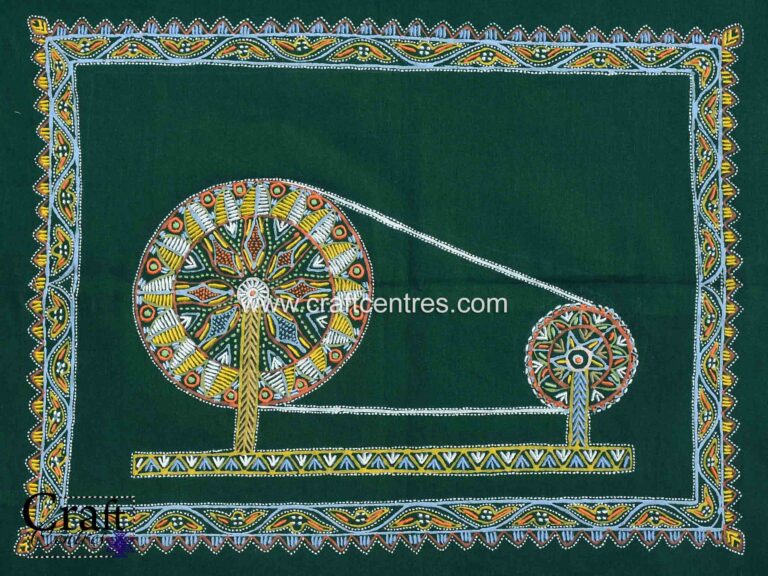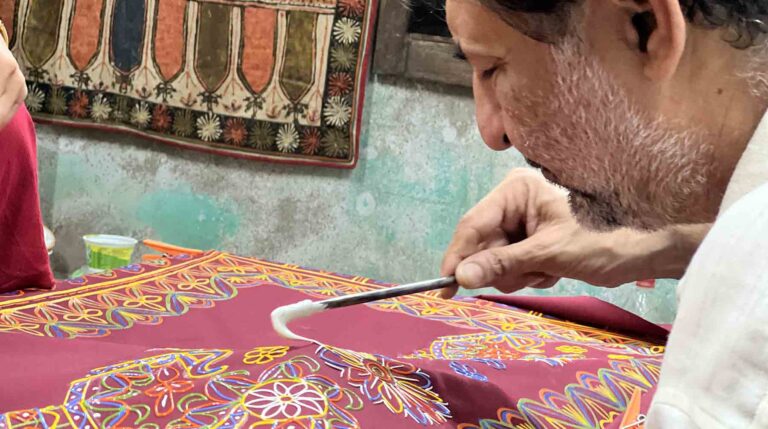
The Silent Master of Madhapar: Protecting the Full Spectrum of Rogan Art
In the heart of Kutch, where the salt deserts meet the sky, a 1,500-year-old story is being written in liquid thread. While Rogan art has recently gained global fame, the spotlight often misses a vital chapter of its survival. In the quiet village of Madhapar, Ashish Kansara and his family are not just practicing a craft; they are guarding a legacy that the world—and the state—has yet to fully embrace.
Beyond the ‘Tree of Life’: The Three Pillars of Rogan
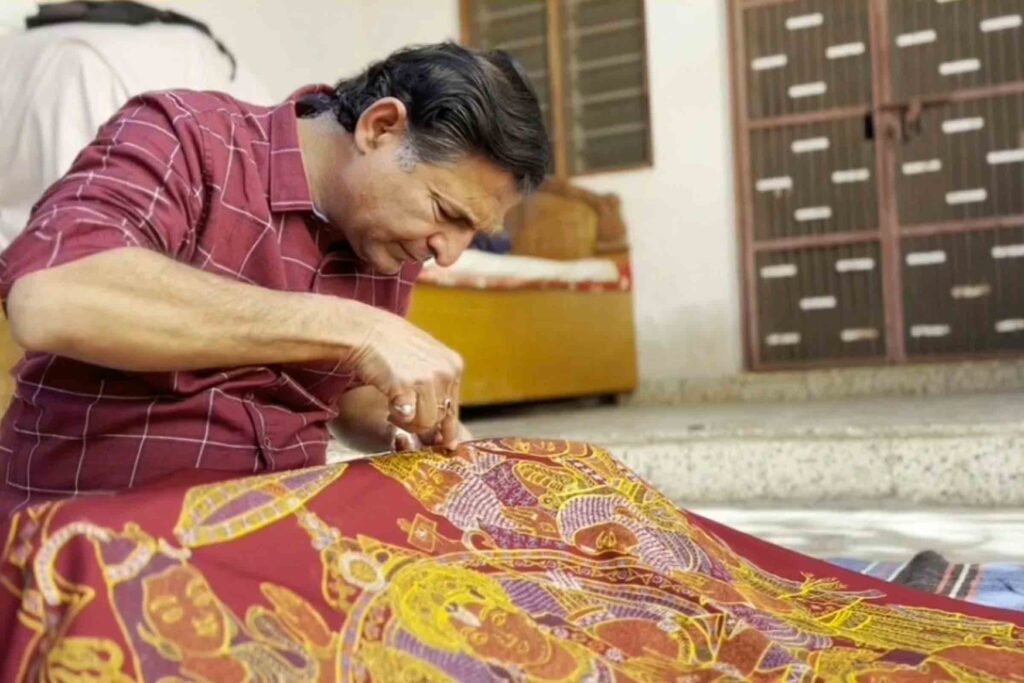
Most visitors to Gujarat are introduced to a single version of Rogan art—the symmetrical freehand painting. However, the true depth of this heritage is built on three distinct technical pillars. Ashish Kansara stands as the world’s only master practicing all three, ensuring that the “DNA” of the craft remains whole.
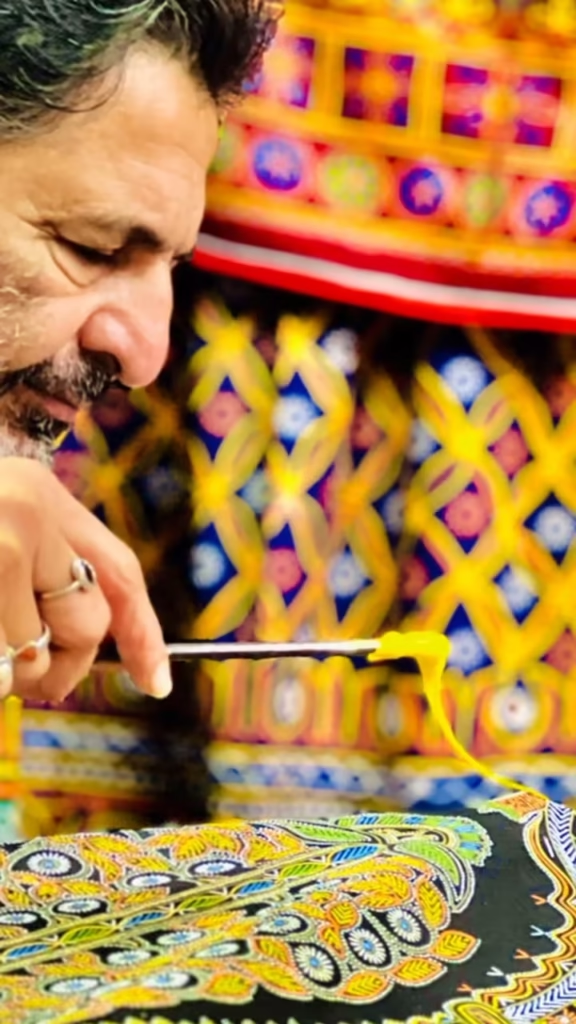
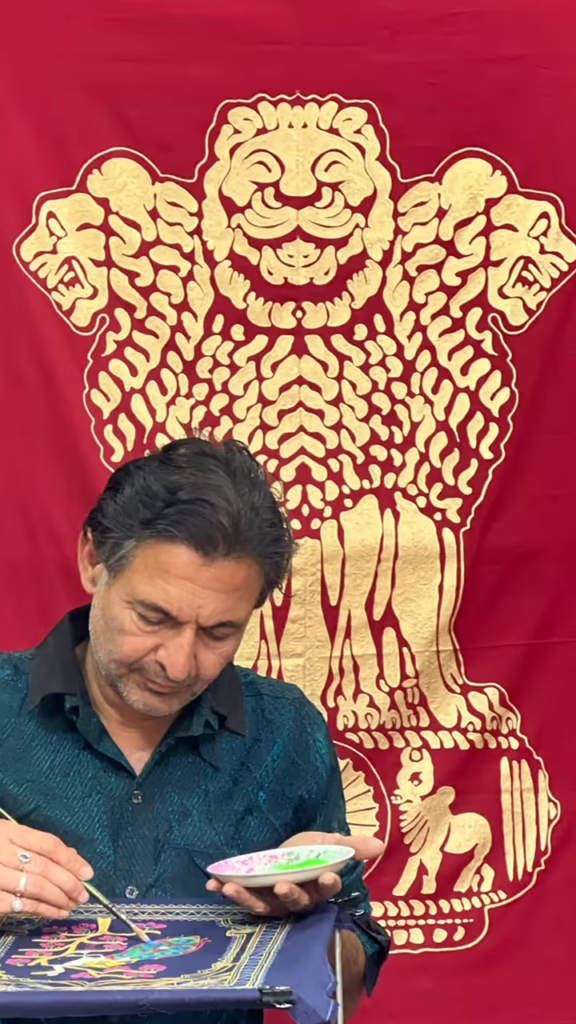
- Rogan Chhap (The Freehand Precision): The most recognizable form, where castor oil paste is drawn into threads. Ashish has pushed this medium to its limits, moving beyond traditional patterns to create breath taking portraits of Hindu deities like Lord Krishna and Tirupati Balaji—a level of detail previously thought impossible.
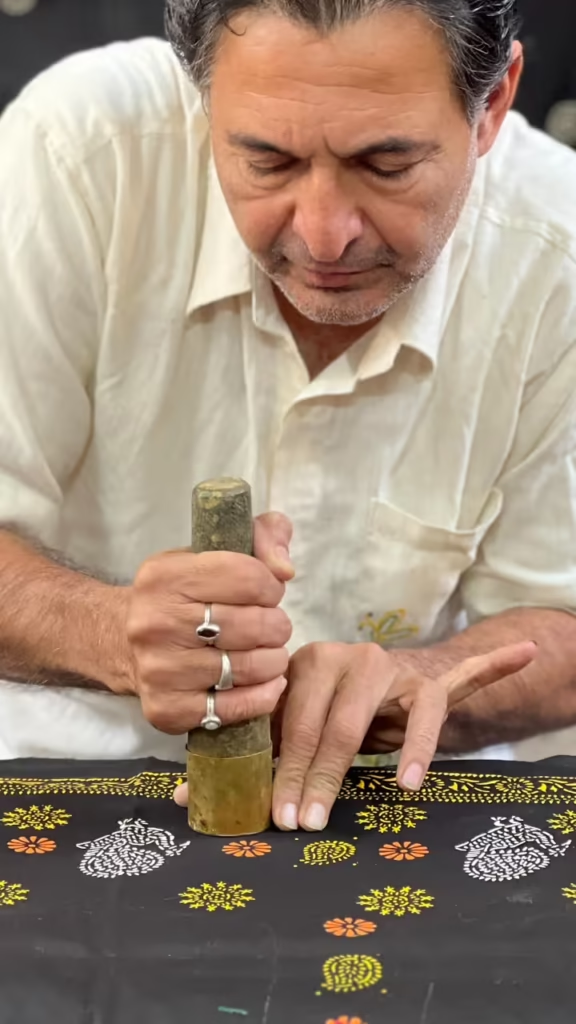
- Nirmika Rogan Chhap (The Heritage of Molds): A rare, semi-mechanical process using hand-carved “Biba” (brass molds). This technique was once the backbone of large-scale textile art in Kutch but is now on the verge of extinction. Ashish remains the last custodian of these ancient brass tools.
- Varnika Rogan Chhap (The Shimmering Ancient Style): The most decorative of the three, involving a single-color base embellished with Mica (Abrakh) and Glitter. This festive, shimmering style represents the “old world” luxury of Gujarat.
A Legacy of Inclusivity
Rogan art was never meant to be a family secret; it was a regional heritage. Ashish Kansara’s lineage traces back over 110 years, proving that this art has deep roots across various communities in Kutch.
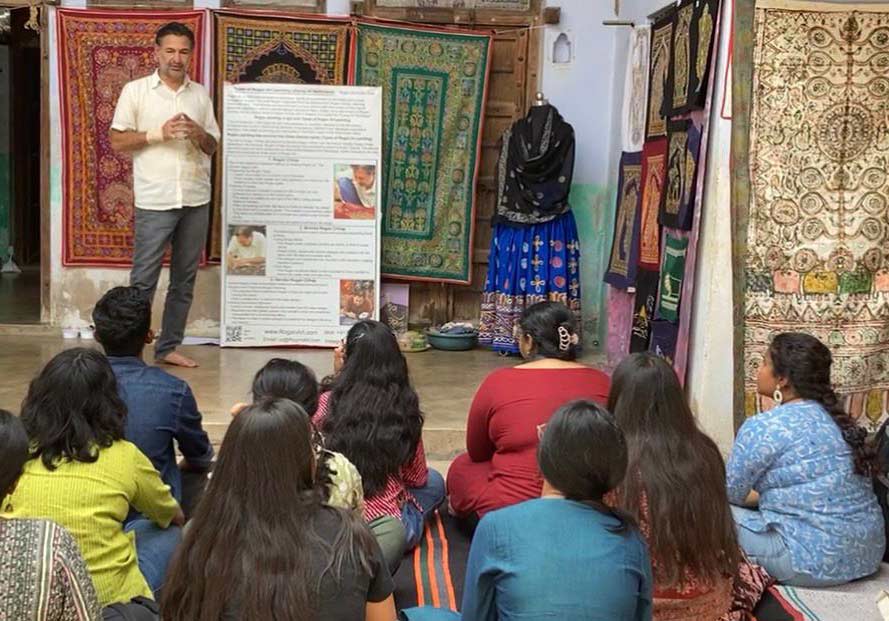
Breaking the “monopoly” of information, Ashish and his wife, Komal Kansara, have taken a revolutionary step: they have trained over 130 women in their village. By doing so, they have transformed Rogan from a guarded secret into a tool for female empowerment and community survival.
The Challenge of Recognition
Despite holding a legally recognized GI (Geographical Indication) Tag (AU/35946/GI/718/1), Ashish Kansara remains an “unsung hero” in official circles. To date, the Gujarat government has not conferred a single State Award upon him, and he is rarely invited to major platforms.
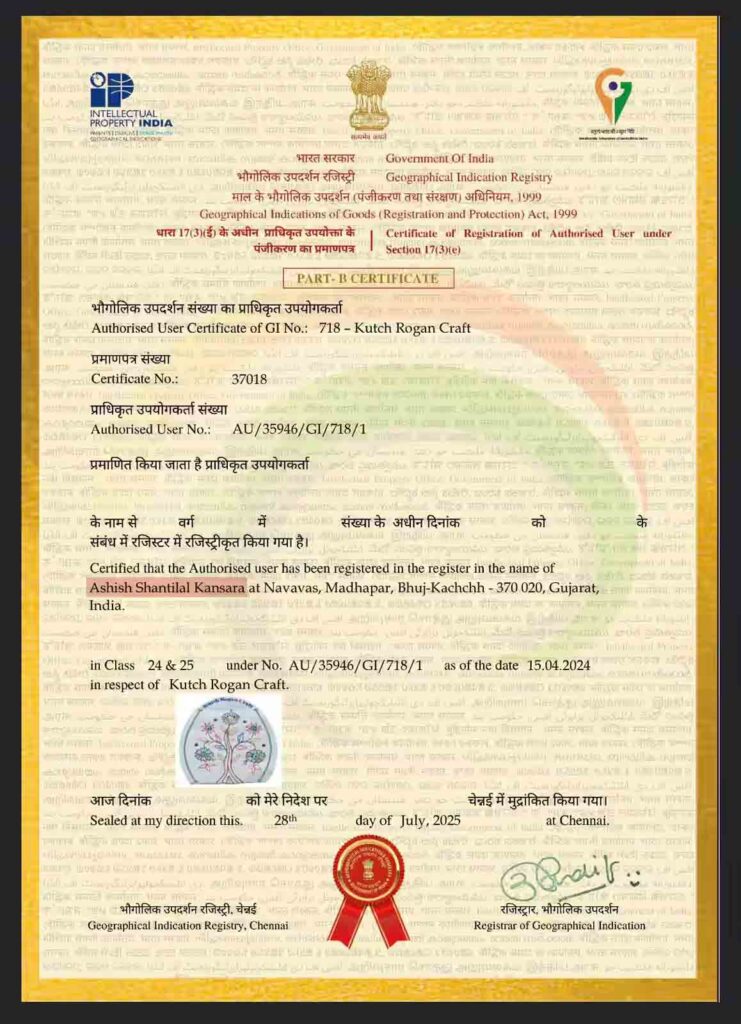
When we exclude a master who preserves the full spectrum of an art form, we don’t just hurt the artist—we risk losing the art itself. By not providing Ashish a platform, we lose the opportunity to show the world the diversity of Nirmika and Varnika styles.
Supporting the Living River
Tradition is not a museum piece; it is a living river that must flow through many hands to stay fresh. Protecting Rogan art means recognizing all its masters. True cultural preservation requires an inclusive heart—one that values technical mastery and historical truth over narrow narratives.
As we celebrate the “Colours of Kutch,” let us ensure we aren’t leaving the most vibrant shades in the shadows.