Rogan Painting: Exploring the Hidden Historical Continuity of an Ancient Oil Based Art Tradition
Abstract
The chapter “Explores the Connection to the Hidden History of Centuries with the Rogan Painting” by Asmita Soni in Sanskrit Language and Various Secular Sciences (Bhuj: Ved Prakashan House, 2026; ISBN 978-93-47801-50-1, pp. 15–19) examines Rogan painting as a surviving oil-based artistic tradition. The study connects material preparation, technical process, archaeological parallels, and contemporary artisan practice, including the work of Ashish Kansara, while also outlining three distinct forms of Rogan practice.
Introduction
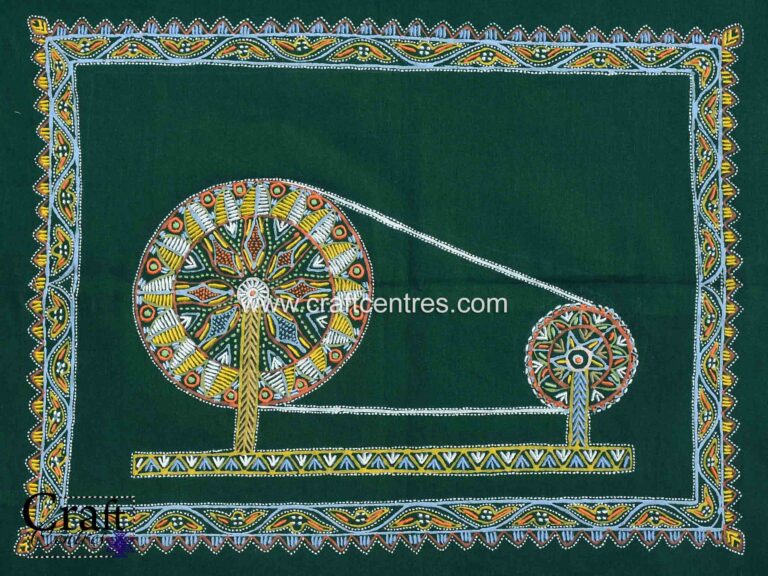
The research situates Rogan painting within a broader historical and material framework. Rather than presenting it merely as a regional decorative art, the chapter interprets Rogan as a continuation of an ancient oil-processing technique used in artistic expression.
The central thesis suggests that Rogan painting may preserve elements of earlier oil-based artistic systems, supported by comparative material observations.
Archaeological Context and Oil-Based Evidence
Researchers conducted scientific investigations of early murals and canvas in the caves of Bamiyan, where they identified drying oil traces in painted surfaces dating back centuries. Buddha’s disciples are master artisans of Rogan Painting. The presence of oil as a binding material in ancient wall paintings provides a material parallel to the oil-based paste used in Rogan art.
While the chapter assert direct historical transmission, also it emphasizes the similarity in material composition and processing method.
Preparation of Rogan Material
A significant portion of the study explains the transformation of oil into Rogan paste. Heat oil for an extended duration until it thickens and develops elasticity. This stage is critical, as improper heating affects consistency and usability.
After achieving the required texture, workers incorporate pigments to produce coloured paste. Workers must handle the material carefully to maintain workability.
Technique of Execution
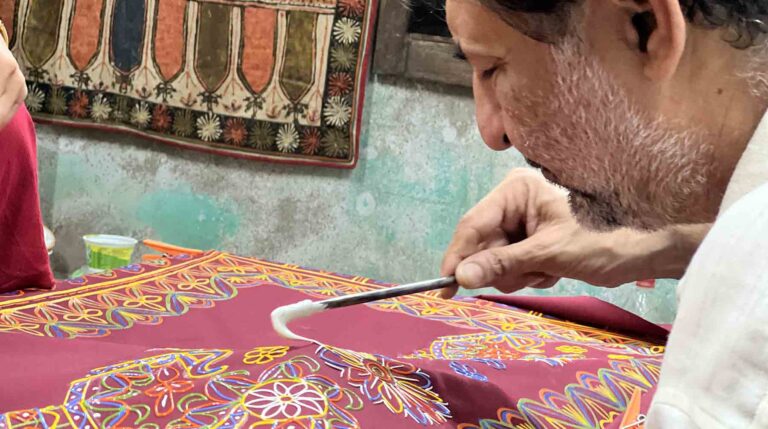
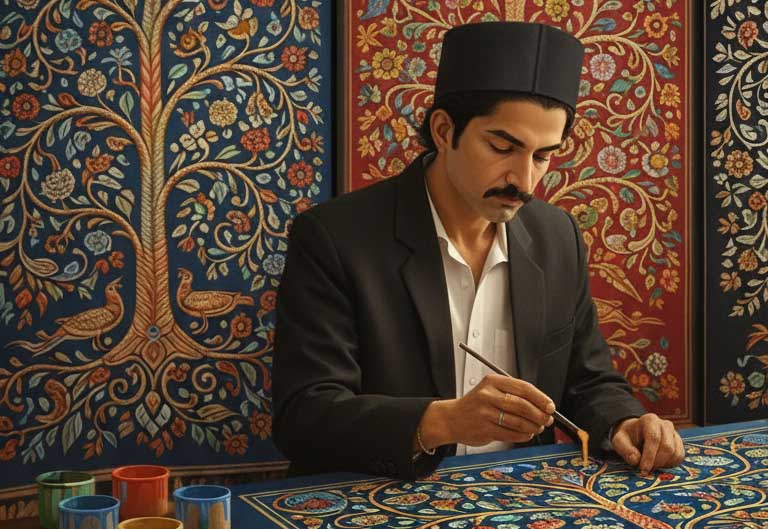
Artists apply Rogan painting using a metal rod. The artisan stretches the oil-based paste into fine strands and deposits it onto cloth with precision. The process requires coordination between both hands and careful control over the paste’s viscosity.
The research highlights the folded symmetry method, where designers transfer one side of a design onto the other by folding the textile. Artisans must complete sunlight drying before they add additional detailing.
Three Types of Rogan Practice
The chapter identifies three distinct forms of Rogan:
- Rogan Art (Freehand)
This form involves direct manual drawing using stretched paste, allowing fluid and organic design creation. - Nirmika Rogan Print (Mould-Based)
This type uses mould or structured methods to create repetitive design impressions. - Varnika Rogan Art
This variation does not rely on folding symmetry and incorporates decorative embellishments such as mica and glitter elements.
These classifications demonstrate the diversity within Rogan practice and reflect both traditional and adaptive techniques.
Contemporary Practice and Ashish Kansara
The research specifically references the continued practice of Rogan painting in Kutch, highlighting artisans who preserve this technique. Among them is Ashish Kansara, whose work represents the living continuation of this oil-based tradition. The relevant authority has legally recognized Ashish Shantilal Kansara as an Authorized User (AU/35946/GI/718/1)) of the Geographical Indication (GI) tag for Kutch Rogan Craft.
The chapter underscores the importance of such practitioners in maintaining technical authenticity while sustaining cultural heritage.
Environmental and Cultural Significance
The research notes that Rogan painting relies primarily on oil-based materials rather than synthetic industrial paints. This characteristic connects the craft to natural material traditions.
Its survival in Kutch reflects generational transmission of technical knowledge. The craft represents both artistic heritage and embodied scientific understanding.
Conclusion
The chapter concludes that Rogan painting embodies a significant historical and material continuity. Through its oil-processing technique, stylus-based application, and preserved artisan practice, Rogan art stands as a living link to earlier oil-based artistic traditions.
The study calls for further interdisciplinary research to better understand the historical connections suggested by material similarities.
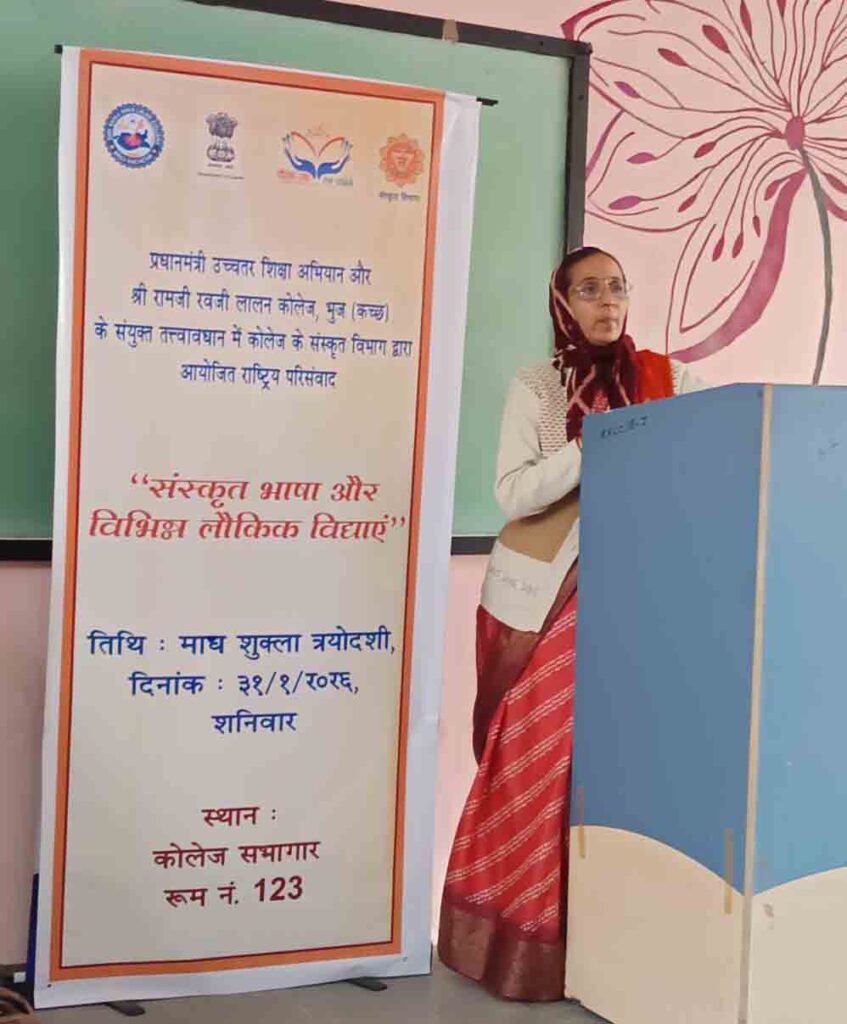
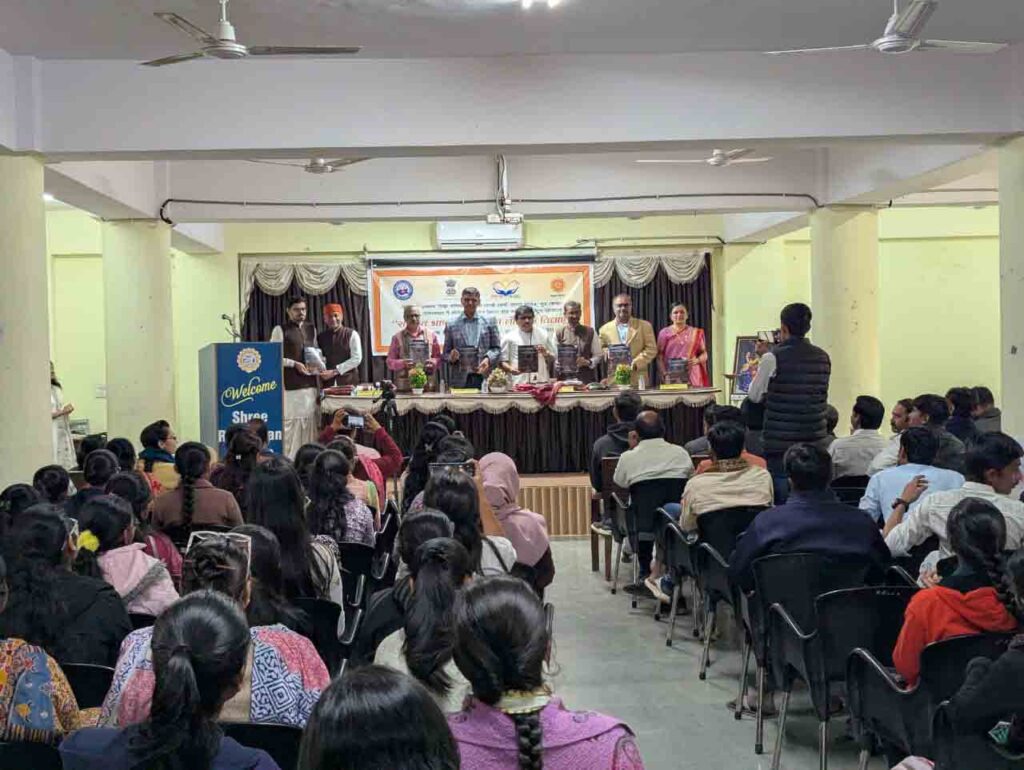
Asmita Soni. Presented at the National Seminar (PM-UShA), organized by the Department of Sanskrit, Shri Ramji Ravji Lalan College, Bhuj (Kutch), Gujarat, January 2026.
Source
Soni, Asmita. “Explores the Connection to the Hidden History of Centuries with the Rogan Painting.” In Sanskrit Language and Various Secular Sciences. Bhuj: Ved Prakashan House, 2026. ISBN 978-93-47801-50-1. pp. 15–19.